When the Jaw Joint Never Forms: Managing Russell-Silver Syndrome with Distraction Osteogenesis
TMJ Disorders
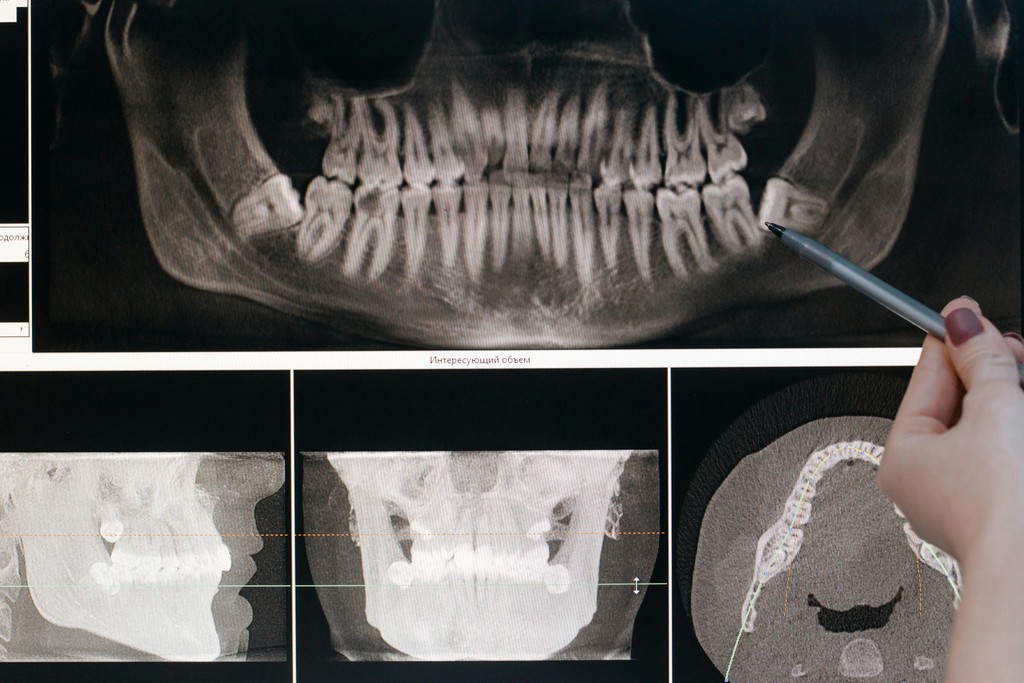
Some patients walk in carrying a diagnosis that most practitioners will encounter perhaps once in a career — if at all. This young woman was one of them. She had Russell-Silver Syndrome, a rare congenital growth disorder — and its maxillofacial consequence in her case was condylar agenesis: the jaw joint on one side had simply never formed.
Not underdeveloped. Not dysplastic. Not present and damaged. Absent. The jaw had no condyle on the affected side.
The clinical result was striking and visible from across the room: severe facial asymmetry, a jaw that deviated significantly to the affected side, a malocclusion that made normal dental function impossible, and a face that had spent years growing around a mechanical deficiency that was present from birth.
Understanding Russell-Silver Syndrome
Russell-Silver Syndrome (RSS) is a rare genetic disorder caused in most cases by abnormal imprinting of genes on chromosomes 7 or 11. It affects approximately 1 in 75,000 to 100,000 individuals. Clinically, it presents with intrauterine and postnatal growth restriction, distinctive facial features (small triangular face, prominent forehead), body asymmetry, and a range of skeletal abnormalities.
What most people — including some clinicians — do not know is that RSS can include condylar agenesis or severe hypoplasia as part of its skeletal manifestation. When the condyle is absent, the entire jaw on that side lacks a functional growth centre. Over years of growth, the face compensates and adapts — but the asymmetry compounds rather than corrects.
The pre-operative photographs in this case are powerful documentation. The frontal view shows the degree of facial deviation. The profile view shows how severely the mandibular profile is affected. The lateral cephalogram confirms the condylar agenesis radiographically. And the body asymmetry photograph captures the systemic dimension of this syndrome — the asymmetry does not stop at the face.
Clinodactyly — the curved, inward-bending fingers visible in the post-op photograph — is another hallmark of RSS. It is one of those clinical findings that, once you know what RSS looks like, you recognise immediately and completely.
The Surgical Plan: Distraction Osteogenesis
Treatment for condylar agenesis is one of the more philosophically and technically demanding decisions in maxillofacial surgery, because it involves creating bone where there is none — and doing so in a living, growing patient.
We used distraction osteogenesis — a technique based on the fundamental biological principle that bone will grow to fill a gap, provided the gap is created slowly and steadily. In the jaw, this involves surgically cutting the bone and placing a distraction device. The device is then activated gradually (typically 1mm per day, sometimes in 0.5mm increments) — slowly separating the bony segments and allowing new bone to form in the gap between them.
The pre-operative planning model in this case shows the distractor device — a precision instrument that would guide the new bone in the correct vector over the weeks of distraction. The post-distraction OPG shows the distractor in place with the lengthened mandible — new bone visible in the distraction gap.
The post-operative profile photograph shows the improvement in facial symmetry achieved. This is not a perfect correction — in condylar agenesis, perfect symmetry is rarely achievable in a single surgical phase — but it is a meaningful, significant, life-changing improvement.
What This Case Represents
Beyond the surgical technique, this case represents something important about the nature of maxillofacial practice at its most complex end: the patients who arrive with rare syndromes, compound diagnoses, and needs that require interdisciplinary thinking — orthodontics, growth monitoring, surgical planning, psychological support — are often the patients who have been told by others that there is not much to be done.
There is always something to be done. The question is whether the treating team has the experience and planning capability to do it.
— Dr. Hema | Oral & Maxillofacial Surgeon | Hyderabad
Let's talk about your case
Whether you're a patient researching options, a family member trying to understand a diagnosis, or a GP or dentist with a complex referral — reach out.

Let's talk about your case
Whether you're a patient researching options, a family member trying to understand a diagnosis, or a GP or dentist with a complex referral — reach out.
Let's talk about your case
Whether you're a patient researching options, a family member trying to understand a diagnosis, or a GP or dentist with a complex referral — reach out.