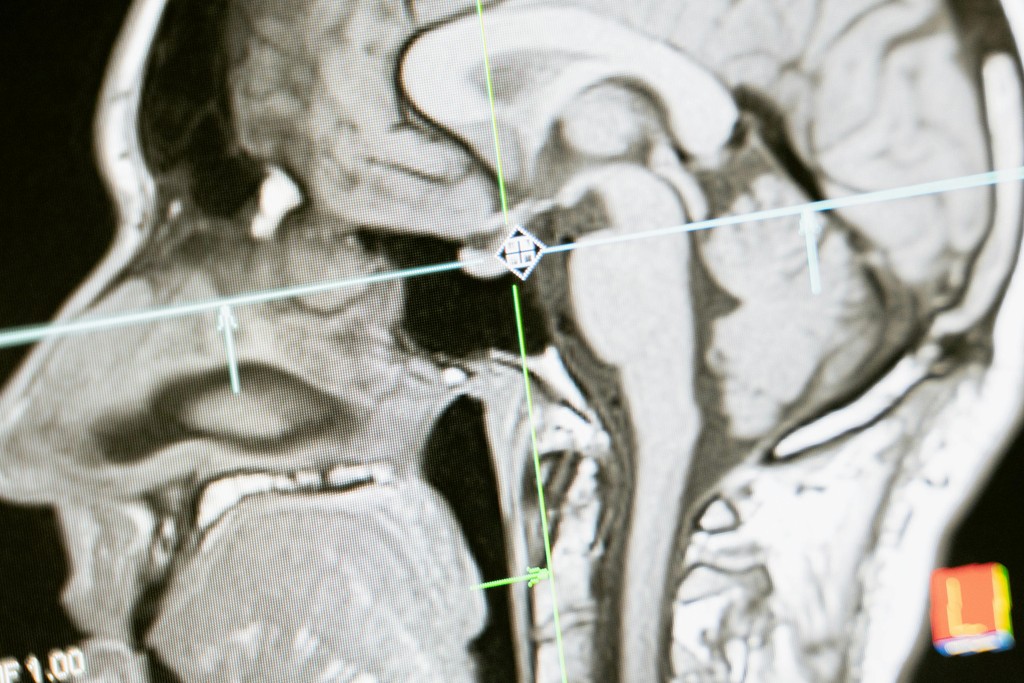
When a child walks in with a swelling in the mouth, the differential diagnosis runs differently than it does for an adult. Developmental cysts, dentigerous cysts, infections — these are the more common culprits. What I did not expect in this young boy was a neurilemmoma: a rare benign tumour of the nerve sheath that had grown to 44.5 millimetres within his mandible.
This case remains one of the more memorable diagnostic journeys in my practice — not because the surgery was the most complex, but because the diagnosis required careful clinical and radiological thinking to arrive at before the histopathologist confirmed what the operating field had already strongly suggested.
What Is a Neurilemmoma?
Also called a schwannoma, a neurilemmoma is a benign tumour arising from Schwann cells — the cells that form the myelin sheath around peripheral nerves. In the oral and maxillofacial region, these tumours are rare in adults and genuinely uncommon in children. When they do occur in the jaw, they most often arise from the inferior alveolar nerve — the nerve running through the mandibular canal that supplies sensation to the lower teeth and chin.
Unlike some jaw lesions that grow silently, this patient presented with visible intraoral swelling — the lesion had expanded the bone enough to become clinically apparent. The frontal view showed a child with visible facial asymmetry; the intraoral photograph showed a significant bulging of the lower jaw mucosa.
The Role of CBCT in Diagnosis
Modern diagnosis of jaw lesions cannot rely on OPG alone. In this case, a CBCT (Cone Beam Computed Tomography) scan was essential. The CBCT revealed a well-defined, expansile radiolucent lesion measuring 44.5 mm — large enough to have caused significant bone expansion while maintaining the integrity of the cortical plates. This radiological behaviour — expansion without perforation — is more consistent with a slow-growing, pressure-based expansion than with an aggressive, destructive process.
The differential at this stage included dentigerous cyst, odontogenic keratocyst, unicystic ameloblastoma, and central haemangioma. The clinical presentation and CBCT characteristics pointed us toward a non-odontogenic pathology, and the eventual suspicion of a neural tumour guided the surgical planning.
The Surgery and Histopathology
We approached the lesion intraorally, reflecting a full-thickness mucoperiosteal flap to expose the expanded buccal cortex. The lesion was enucleated carefully — given the likely neural origin, preserving as much of the adjacent nerve function as possible was a priority throughout the dissection.
The histopathological slide confirmed what the clinical story had suggested: neurilemmoma, showing the characteristic Antoni A (cellular, palisaded) and Antoni B (loose, myxoid) tissue patterns that define this tumour under the microscope. The circularcross-section of the tumour on the histology slide shows the organised architecture of a Schwann cell tumour beautifully.
Post-Operative Rehabilitation
What makes this case particularly satisfying is not just the surgery — it is the post-operative photograph. The post-op OPG shows a mandible in the process of recovery, and the post-op rehabilitation photograph shows this young boy with a normal, healthy, functional occlusion. He has his teeth. He has his smile. He has, as far as the available evidence suggests, a normal nerve function and a normal childhood ahead of him.
For a 44.5mm jaw tumour in a child, that outcome is everything.
For Clinicians — When to Think Neural
Jaw lesions that are well-defined on CBCT, expansile rather than destructive, and arise in close proximity to the inferior alveolar canal in a patient with no history of cyst-forming syndromes deserve consideration of a neural origin. The histopathology will settle the diagnosis, but clinical suspicion guides the surgical approach.
Early diagnosis in this patient, before cortical perforation or pathological fracture, made a conservative, nerve-sparing approach possible.
— Dr. Hema | Oral & Maxillofacial Surgeon | Hyderabad
Let's talk about your case
Whether you're a patient researching options, a family member trying to understand a diagnosis, or a GP or dentist with a complex referral — reach out.

Let's talk about your case
Whether you're a patient researching options, a family member trying to understand a diagnosis, or a GP or dentist with a complex referral — reach out.
Let's talk about your case
Whether you're a patient researching options, a family member trying to understand a diagnosis, or a GP or dentist with a complex referral — reach out.