One Patient, Five Diagnoses: The Clinical Detective Work Behind Gorlin-Goltz Syndrome
Oral Cancers
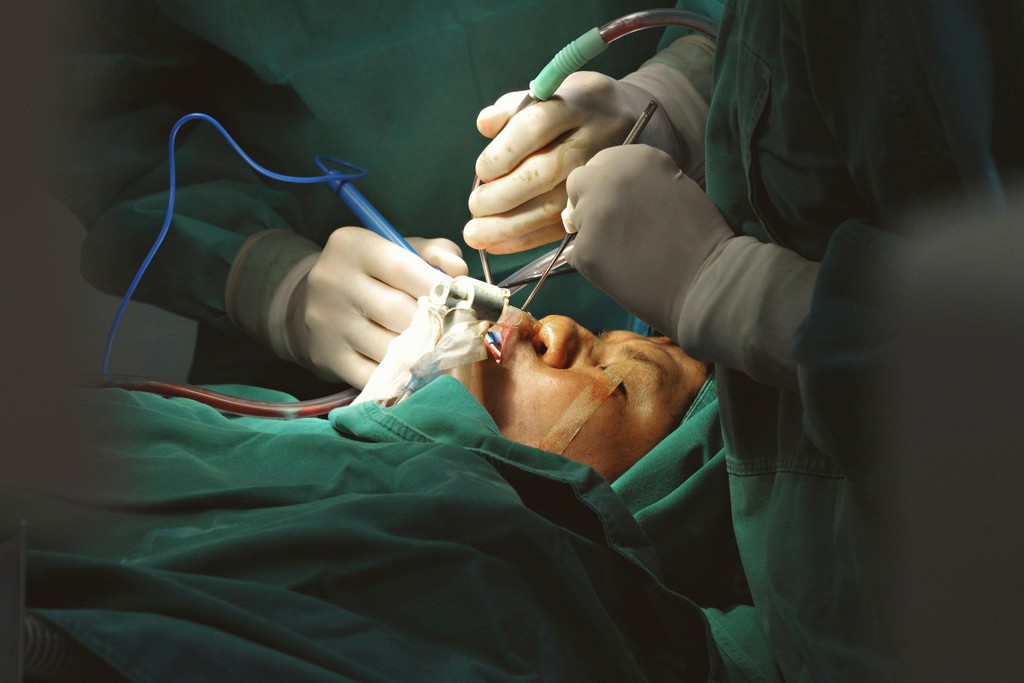
She came in complaining of pus discharge from near her lower front teeth for ten days. A straightforward presentation, seemingly. And yet within the first few minutes of examining her, I knew that what we were looking at was far from straightforward.
This patient's clinical story is one of the most compelling diagnostic detective journeys in my practice — and it begins with a sinus tract and ends with a confirmed multi-system genetic syndrome that would require careful, multi-stage surgical management.
The Presenting Complaint and the First Clinical Clues
On intraoral examination, there was a sinus tract opening near the lower vestibule — an opening through the gum that represents a drainage path for pus, typically from an infected tooth or cyst. On extraoral examination, however, something less routine caught my attention: mild frontal bossing (a subtle prominence of the forehead) and mid-face deficiency (the middle third of the face appearing slightly underdeveloped relative to the forehead and lower face). These are facial findings that don't accompany a simple dental abscess.
The OPG was the next critical step — and it changed the direction of the entire clinical encounter. The panoramic radiograph showed multiple radiolucent lesions involving both the maxilla and the mandible simultaneously. Multiple jaw cysts. In a young woman. With frontal bossing.
At this point, the diagnosis had already formed in my mind. We were looking at Gorlin-Goltz Syndrome.
What Is Gorlin-Goltz Syndrome?
Gorlin-Goltz Syndrome — formally known as Basal Cell Nevus Syndrome — is a rare autosomal dominant genetic condition caused by a mutation in the PTCH1 gene, a tumour suppressor. It is a multi-system disorder with manifestations spanning the oral cavity, skin, nervous system, eyes, and skeleton.
The oral hallmark is multiple odontogenic keratocysts (OKCs) — aggressive jaw cysts lined by a specific type of epithelium that produces a characteristic cheesy, keratinous content. OKCs have a notorious reputation for recurrence after simple enucleation alone, which makes surgical technique critically important.
A comprehensive systemic evaluation was ordered. Every investigation added another piece to the diagnostic picture:
CT brain showed falx cerebral calcifications — calcification in the membrane between the two cerebral hemispheres, a classic Gorlin-Goltz finding. Chest X-ray showed splayed ribs — characteristic bifid or abnormally fused rib patterns. Skin examination revealed macular patches on the forearm — basal cell nevi, the lesions that give the syndrome one of its alternative names. Palm examination showed palmar pits — tiny depressions in the skin of the palms, pathognomonic (uniquely characteristic) of this syndrome. Facial skin examination showed nodules resembling skin tags — basal cell lesions.
Five systems. Five confirmatory findings. One genetic syndrome. This is what thorough clinical examination delivers.
The Surgical Approach
With multiple cysts involving both jaws, the surgical planning required careful mapping of all lesions. We used a crevicular incision (along the gum margin) with full-thickness flap reflection, and the postage stamp method — multiple small perforations through the thinned buccal cortex to allow controlled access to multiple cyst cavities simultaneously.
The cysts were enucleated completely — the cheesy, keratinous content characteristic of OKCs was noted during the procedure. Complete removal of the cyst lining is essential, as residual epithelial cells are the primary source of recurrence. The excised specimens from multiple cysts are visible in the final photographs.
Both maxillary and mandibular lesions were addressed. The enucleation photographs show the extensive nature of the surgery — this was not a single cyst in a single jaw, but a multi-focal, multi-quadrant procedure.
Lifelong Surveillance Is Part of Treatment
Gorlin-Goltz Syndrome requires lifelong management beyond the initial surgery. OKCs recur in approximately 60% of cases — making long-term radiological follow-up with annual OPGs or CBCTs essential. The basal cell carcinomas of the skin require dermatological surveillance. The intracranial calcifications require neurological monitoring.
Surgery treats the existing pathology. Surveillance catches what comes next.
For clinicians: a young patient with multiple jaw cysts on OPG should trigger a systematic evaluation for Gorlin-Goltz Syndrome. The jaw findings are usually the presenting complaint. The systemic findings require active investigation.
— Dr. Hema | Oral & Maxillofacial Surgeon | Hyderabad
Let's talk about your case
Whether you're a patient researching options, a family member trying to understand a diagnosis, or a GP or dentist with a complex referral — reach out.

Let's talk about your case
Whether you're a patient researching options, a family member trying to understand a diagnosis, or a GP or dentist with a complex referral — reach out.
Let's talk about your case
Whether you're a patient researching options, a family member trying to understand a diagnosis, or a GP or dentist with a complex referral — reach out.