Making the Invisible Visible: Sclerotherapy for Venous Malformations and Immediate Implants
Dental Implants
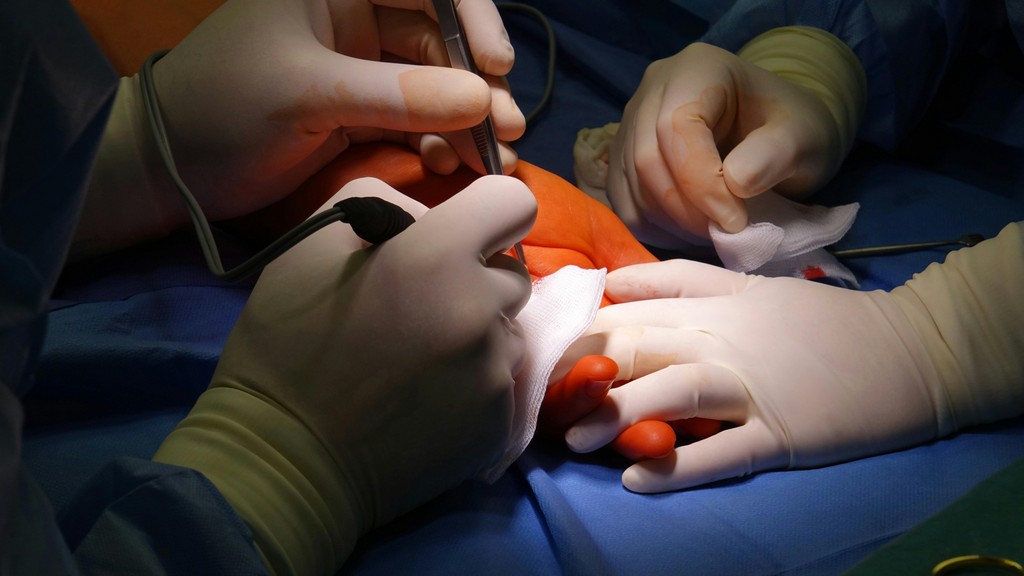
This month's case page holds two stories from my practice that are, on the surface, entirely different procedures treating entirely different conditions — but which share a common thread: the power of the right intervention, precisely timed, to produce a result that changes how a person sees themselves and how they move through the world.
Case A: Percutaneous Sclerotherapy for Venous Malformation
A young woman presented with a dark, soft, compressible swelling along the lower jaw mucosa — a swelling that had been present since childhood, had grown slowly, and had recently begun causing discomfort. On clinical examination and imaging, this was a venous malformation: a congenital vascular anomaly characterised by abnormally formed, dilated venous channels that pool blood and produce a characteristic bluish, compressible lesion.
Venous malformations (VMs) are not haemangiomas — a distinction worth clarifying. Haemangiomas are proliferative vascular tumours that typically involute (shrink) over time. VMs are structural anomalies that do not involute. They can gradually expand, cause pain due to thrombosis within the malformed vessels, and in the oral cavity, can bleed, interfere with function, and create aesthetic concerns.
The treatment of choice for accessible, low-flow venous malformations is percutaneous sclerotherapy — a minimally invasive procedure in which a sclerosing agent is injected directly into the malformation under image guidance. The sclerosant causes controlled inflammation within the abnormal vein walls, leading to fibrosis and progressive obliteration of the malformed vessels.
The procedure is performed in a clinic or day-surgery setting, typically requires multiple sessions depending on the size of the lesion, and avoids the risks associated with surgical excision in a vascular field. The "after sclerotherapy" image in this case shows the lesion significantly reduced — collapsed, fibrosed, and no longer filling with blood.
The transformation is quiet but significant. A lesion that had been there all her life, that she had learned to work around, progressively gone.
Case B: Immediate Dental Implant Placement
The second case on this page is a different kind of transformation. A patient with multiple failing teeth — damaged, unsalvageable, and requiring extraction — sat in my chair facing the prospect of significant tooth loss and the functional and aesthetic consequences that follow.
Conventional implant treatment involves tooth extraction, a healing period of three to six months for the extraction socket, and then implant placement in the healed bone, followed by a further healing period before the final prosthetic crowns are placed. Total treatment time: twelve to eighteen months or more.
Immediate implant placement changes this timeline. Implants are placed directly into the fresh extraction sockets at the time of tooth removal — taking advantage of the existing bone architecture of the socket as a guide for implant positioning. With careful case selection and precise surgical execution, this approach compresses treatment time significantly and preserves the bone and soft tissue architecture that would otherwise be lost during the healing phase.
The post-operative photograph of this patient — a full, confident smile with well-positioned, natural-looking restorations — is the measure of what this approach, done well, delivers. From multiple failing teeth to a fully restored smile, achieved with surgical efficiency and patient care at every step.
Two patients. Two very different conditions. One principle: the right procedure at the right time changes everything.
— Dr. Hema | Oral & Maxillofacial Surgeon | Hyderabad
Let's talk about your case
Whether you're a patient researching options, a family member trying to understand a diagnosis, or a GP or dentist with a complex referral — reach out.

Let's talk about your case
Whether you're a patient researching options, a family member trying to understand a diagnosis, or a GP or dentist with a complex referral — reach out.
Let's talk about your case
Whether you're a patient researching options, a family member trying to understand a diagnosis, or a GP or dentist with a complex referral — reach out.