India's Most Preventable Oral Cancer: Understanding Gingivo-Buccal Sulcus Carcinoma
Oral Cancers
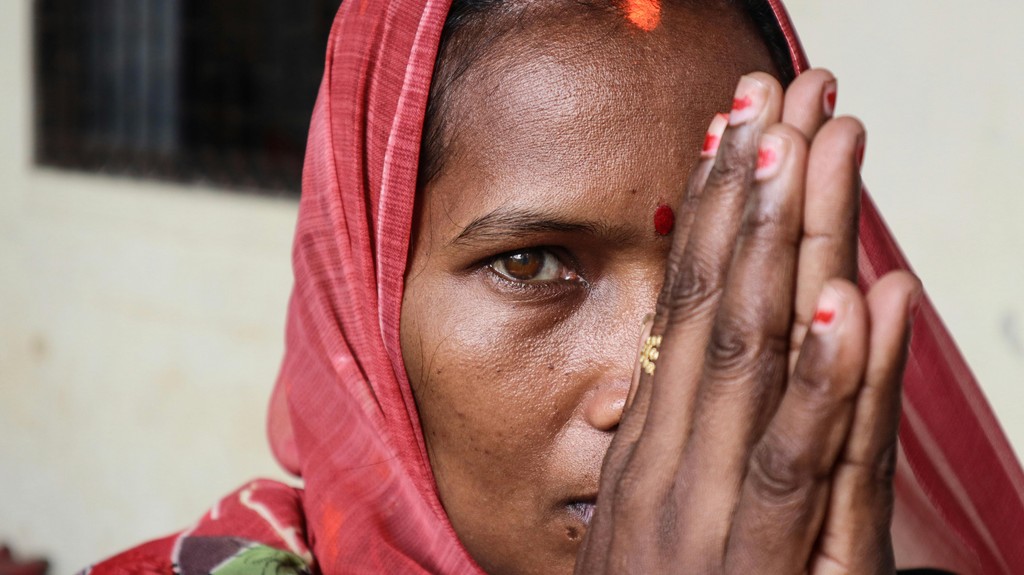
India carries a disproportionate share of the global oral cancer burden. Approximately 77,000 new cases of oral cancer are diagnosed in India every year — a number driven in large part by the widespread use of tobacco in forms uniquely common to the subcontinent: chewed tobacco, gutka, paan masala, and betel quid. The gingivo-buccal sulcus — the groove where the gum meets the inner surface of the cheek — is one of the most common sites, because it is where tobacco products are most often held.
When a young woman walked into my clinic with a swelling in her right gingivo-buccal sulcus, my first clinical thought was not about how unusual this presentation was. My first clinical thought was about how urgent it was — because carcinoma in a young patient carries the implication of potentially aggressive disease, and every day of delay between diagnosis and surgery matters.
The Clinical Presentation
The pre-operative photographs document the clinical picture clearly. Frontally, the patient looks unremarkable — which is part of why oral cavity carcinomas in this location are underdiagnosed until they are locally advanced. The lesion is hidden inside the mouth, not visible in the mirror, not painful in its early stages.
On intraoral examination, the swelling was visible in the right gingivo-buccal sulcus — an area that in a tobacco user deserves careful, systematic examination at every dental or medical visit. The lesion showed features consistent with carcinoma: irregular borders, firm consistency, associated with mucosal changes.
The occlusion remained intact at this stage, which was clinically significant: it suggested that the underlying mandibular bone had not yet been significantly invaded — an important factor in surgical planning.
Surgical Management: Wide Local Excision and Retrograde Filling
The surgical approach involved a wide local excision of the tumour with adequate margins. In gingivo-buccal sulcus carcinomas, achieving adequate margins in the depth of the sulcus — near the bone, near the tooth roots — requires careful planning.
In this case, the proximity of the tumour to the lower tooth roots required an additional step: retrograde root canal filling. When surgery involves the area around tooth roots (periapical region), the blood supply to the tooth's pulp may be compromised. A retrograde fill involves approaching the root tip from below (after the flap is reflected), removing a small portion of the root tip, and sealing the root canal from the apex. This preserves the tooth while ensuring that no compromised pulpal tissue remains adjacent to the surgical site.
The intraoperative photographs show the flap reflection and the retrograde filling being performed — a level of surgical detail that demonstrates the complexity this case required, and the commitment to preserving dental function alongside oncological adequacy.
What Young Age in Oral Cancer Means
A young patient with oral cancer is not just a statistic. It is a signal worth examining. The common assumption is that oral cancer is a disease of older tobacco users — and while age and tobacco duration are risk factors, younger patients do present, sometimes with aggressive tumours and sometimes without the classic tobacco history. Viral factors (HPV), genetic susceptibility, and other carcinogenic exposures can all contribute.
For young patients, I always emphasise that early diagnosis is not just clinically advantageous — it is the difference between a relatively conservative surgery and one that involves jaw resection, reconstruction, and prolonged rehabilitation.
The Message for Every Patient and Clinician
For patients: if you use tobacco in any form, make intraoral self-examination part of your routine. Any new area of redness, white patching, ulceration, or swelling that persists for more than three weeks needs professional evaluation. Not eventually. Now.
For referring clinicians: a suspicious gingivo-buccal sulcus lesion in a tobacco user needs to be referred with urgency. Not in a fortnight. This week. Biopsy should not wait for the next available appointment.
Oral cancer is one of the most preventable, and most treatable when caught early, cancers on earth. The tragedy is how late most patients present — not because the lesion wasn't there, but because no one looked.
Please look.
— Dr. Hema | Oral & Maxillofacial Surgeon | Hyderabad
Let's talk about your case
Whether you're a patient researching options, a family member trying to understand a diagnosis, or a GP or dentist with a complex referral — reach out.

Let's talk about your case
Whether you're a patient researching options, a family member trying to understand a diagnosis, or a GP or dentist with a complex referral — reach out.
Let's talk about your case
Whether you're a patient researching options, a family member trying to understand a diagnosis, or a GP or dentist with a complex referral — reach out.