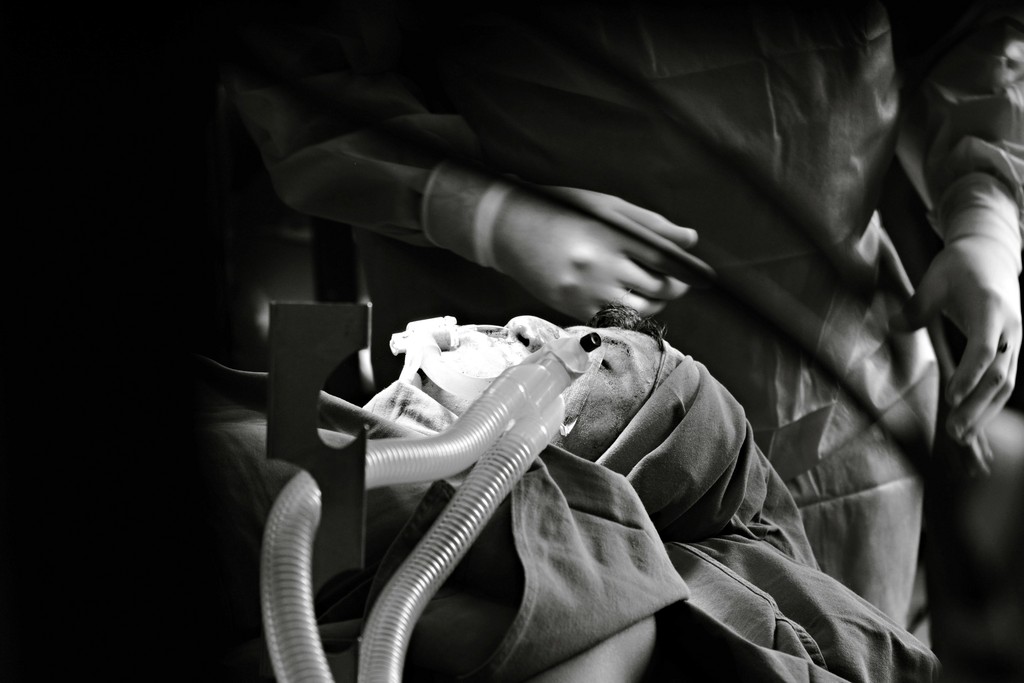
The COVID-19 pandemic brought with it a secondary epidemic that devastated patients across India in 2021 — one caused not by a virus, but by a mold. Mucormycosis, colloquially called Black Fungus, became tragically common in diabetic patients who had been treated with high-dose corticosteroids for COVID-19. The steroids, necessary for managing inflammatory lung disease, suppressed the immune system and elevated blood sugar simultaneously — creating the ideal environment for a fungal infection with lethal ambition.
When this patient walked into my clinic, the infection had already invaded and destroyed her right maxilla. What I needed to do first was save her life. The rehabilitation could come later.
What Is Mucormycosis?
Mucormycosis is caused by molds of the order Mucorales — fungi that are ubiquitous in the environment but pose no significant threat to immunocompetent individuals. In immunocompromised patients — particularly diabetics with poor glycaemic control, patients on prolonged steroid therapy, or those post-COVID — these molds become opportunistic invaders of devastating efficiency.
Their primary mechanism of destruction is angioinvasion: they invade blood vessels, forming clots that cut off blood supply to tissue. Without blood supply, tissue dies. In the rhinocerebral-oral form of mucormycosis, this means the nasal passages, palate, maxilla, and in advanced cases the orbit and brain, undergo progressive necrotic destruction.
Speed of treatment is not a preference here — it is survival arithmetic.
The Surgery: Maxillectomy
Once the clinical and radiological assessment confirmed the extent of fungal invasion in this patient's right maxilla, the decision for maxillectomy — surgical removal of the affected maxilla — was made. This is never a simple decision. The maxilla is the structural foundation of the mid-face, housing the upper teeth, forming the floor of the orbit, and contributing to the nasal cavity. Its removal results in a significant facial and functional defect.
The intraoperative photographs document the infected, necrotic right maxilla — tissue that has lost its blood supply and died due to fungal angioinvasion. The maxillectomy was performed, removing all infected and non-viable tissue. The post-maxillectomy defect is visible — a large opening in the palate communicating with the sinus and nasal cavity.
This is the point where many patients' stories effectively end in terms of quality of life. But it need not be.
3D Surgical Planning and Prosthetic Rehabilitation
The reconstruction phase required careful pre-surgical planning. A 3D model of this patient's skull was created — visible in the case photographs — allowing us to precisely plan the dimensions and contours of the prosthetic reconstruction before entering the operating room. This type of planning reduces surgical time, improves the precision of implant placement, and ultimately delivers better functional and aesthetic outcomes.
The post-rehabilitation OPG shows the reconstruction with titanium plates and implants in place — a structural framework that restores the mechanical continuity of the jaw. The final post-rehabilitation photograph is the image I always return to in this case: the patient, smiling. A full, genuine smile — the kind that comes after having survived something catastrophic and come out the other side whole.
That photograph is the entire argument for why rehabilitation after major head and neck surgery is not optional. It is the restoration of a person's face, function, and dignity.
What This Case Teaches
Mucormycosis is a reminder that oral and maxillofacial surgery sits at the intersection of life-saving intervention and quality-of-life restoration. The maxillectomy saved her life. The 3D-planned prosthetic rehabilitation gave her life back.
For clinicians managing diabetic patients post-COVID: facial pain, nasal discharge, palatal discolouration, or dark/necrotic tissue in the oral cavity in an immunocompromised patient requires urgent, same-day evaluation. Mucormycosis moves fast. The surgical team must move faster.
— Dr. Hema | Oral & Maxillofacial Surgeon | Hyderabad
Let's talk about your case
Whether you're a patient researching options, a family member trying to understand a diagnosis, or a GP or dentist with a complex referral — reach out.

Let's talk about your case
Whether you're a patient researching options, a family member trying to understand a diagnosis, or a GP or dentist with a complex referral — reach out.
Let's talk about your case
Whether you're a patient researching options, a family member trying to understand a diagnosis, or a GP or dentist with a complex referral — reach out.