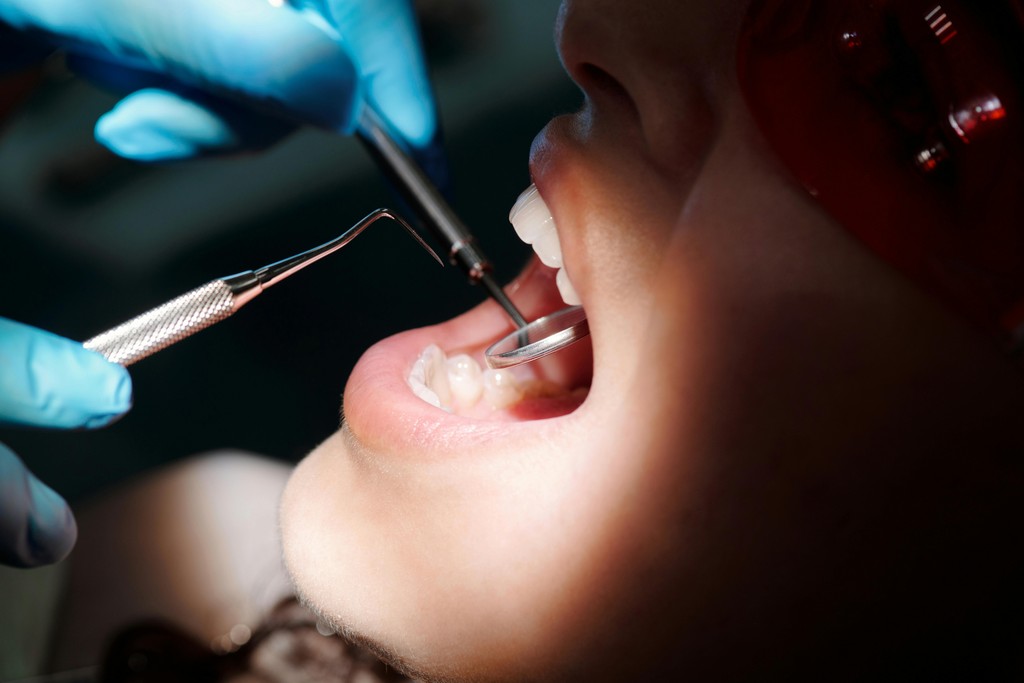
A teenage boy walked into my clinic with a lump on the roof of his mouth. It had been there for a few months. He wasn't in pain, he could eat normally, and he had assumed — as most young patients do — that it would eventually go away on its own.
It hadn't. And in my clinical experience, a slow-growing, painless palatal swelling in a young patient very rarely resolves on its own. It needs to be properly diagnosed and, in almost every case, surgically removed.
This was a pleomorphic adenoma of a minor salivary gland — the most common benign tumour of salivary tissue, arising in a location most people don't even know exists.
The 600 Glands Nobody Talks About
Most people are aware of the three major salivary glands — the parotid (in front of the ear), the submandibular (under the jaw), and the sublingual (under the tongue). These are the headline act of the salivary system. But scattered throughout the lining of your cheeks, lips, palate, and tongue are between 600 and 1,000 minor salivary glands — tiny structures that collectively contribute significantly to oral moisture and function.
These minor glands can give rise to tumours. The majority are benign, and pleomorphic adenoma is the most common. But "benign" in this context carries an important asterisk: if left untreated, pleomorphic adenomas carry a small but real risk of malignant transformation. If removed incompletely, they recur with frustrating reliability.
What I Found
On intraoral examination, this young patient had a smooth, dome-shaped swelling on the hard palate — firm to touch, well-defined, non-tender, with intact overlying mucosa. This presentation is almost textbook for a minor salivary gland tumour. The intraoral photograph shows it clearly: a swelling that, to the untrained eye, might appear trivial, but to anyone who has managed palatal tumours, signals a specific and actionable diagnosis.
The Surgical Approach
We planned a careful surgical excision under local anaesthesia. The incision was designed around the swelling to allow removal with an adequate cuff of normal tissue — what we call margin-clear excision. The tumour was well-encapsulated, which made the dissection relatively clean, but the periosteum (the thin connective tissue layer over the palatal bone) was also included in the excision specimen to ensure no tumour cells were left behind at the bone surface.
The specimen that emerged was small, smooth, and visually unremarkable — deceptively so, given its clinical significance. The palatal wound was sutured cleanly, and healing was uneventful.
Histopathological examination confirmed the diagnosis: pleomorphic adenoma, showing the characteristic biphasic architecture of epithelial and myoepithelial cells within a chondromyxoid stroma. The microscopy image is beautiful in its complexity — and definitive in its diagnosis.
Why Early Surgery Is the Only Right Answer
This is not a watch-and-wait situation. Studies document a 2–5% malignant transformation rate in pleomorphic adenomas left untreated for a decade or more. In a teenage patient, that represents decades of unnecessary risk. Additionally, incomplete removal — tumours that are simply "shelled out" without clear margins — have recurrence rates approaching 25%. The goal is always complete removal, first time.
Early surgery in this patient meant a straightforward intraoral procedure under local anaesthesia, a two-week healing period, and a complete cure.
For Patients and Referring Clinicians
If you have a painless lump in your mouth — on the palate, cheek, or lip — that has been present for more than four to six weeks and is not resolving, please seek evaluation. Do not wait for it to cause pain or rapid growth. By then, the surgery becomes harder.
For referring colleagues: smooth, dome-shaped palatal swellings in young patients are salivary gland tumours until histopathology proves otherwise. Early referral means simple surgery. Delayed referral means a larger tumour, a more complex excision, and greater risk to the patient.
This young man healed in two weeks and left with a perfectly smooth, healthy palate.
That is what early, precise surgery delivers.
— Dr. Hema | Oral & Maxillofacial Surgeon | Hyderabad
Let's talk about your case
Whether you're a patient researching options, a family member trying to understand a diagnosis, or a GP or dentist with a complex referral — reach out.

Let's talk about your case
Whether you're a patient researching options, a family member trying to understand a diagnosis, or a GP or dentist with a complex referral — reach out.
Let's talk about your case
Whether you're a patient researching options, a family member trying to understand a diagnosis, or a GP or dentist with a complex referral — reach out.